

Barrels aren’t interchangeable. Two mixers can look identical at the batching plant and lead completely different lives: one trundling metro slabs, the other grinding up haul roads with abrasive aggregate. The best barrel for your mixer is determined by the working environment you operate in and the performance criteria you demand of it, and that’s where any honest barrel conversation has to start.
Start with the work, not the barrel.
Before steel grades and blade profiles come two questions: where does the mixer load and mix, and what does a day’s work actually ask of it? Capacity should closely suit your loading and mixing environment. A barrel that doesn’t match the plant, the product or the routes it runs will cost you, in wear or in time. Get the environment and the performance criteria pinned down and the rest of the specification largely writes itself.
The barrel checklist.
This is the checklist we work through on every barrel, straight from the workshop floor:
- Capacity closely suited to your loading and mixing environment
- High-quality steel: Rheemalloy or Hardox
- Wear-resistant centre band
- Blade mesh for extra foundation, stopping blades splitting
- Press-formed blades, eliminating re-flighting cost and inconvenience
- High-quality welds around the track ring against barrel split
- Reinforced dished end with internal chamber for double reinforcing
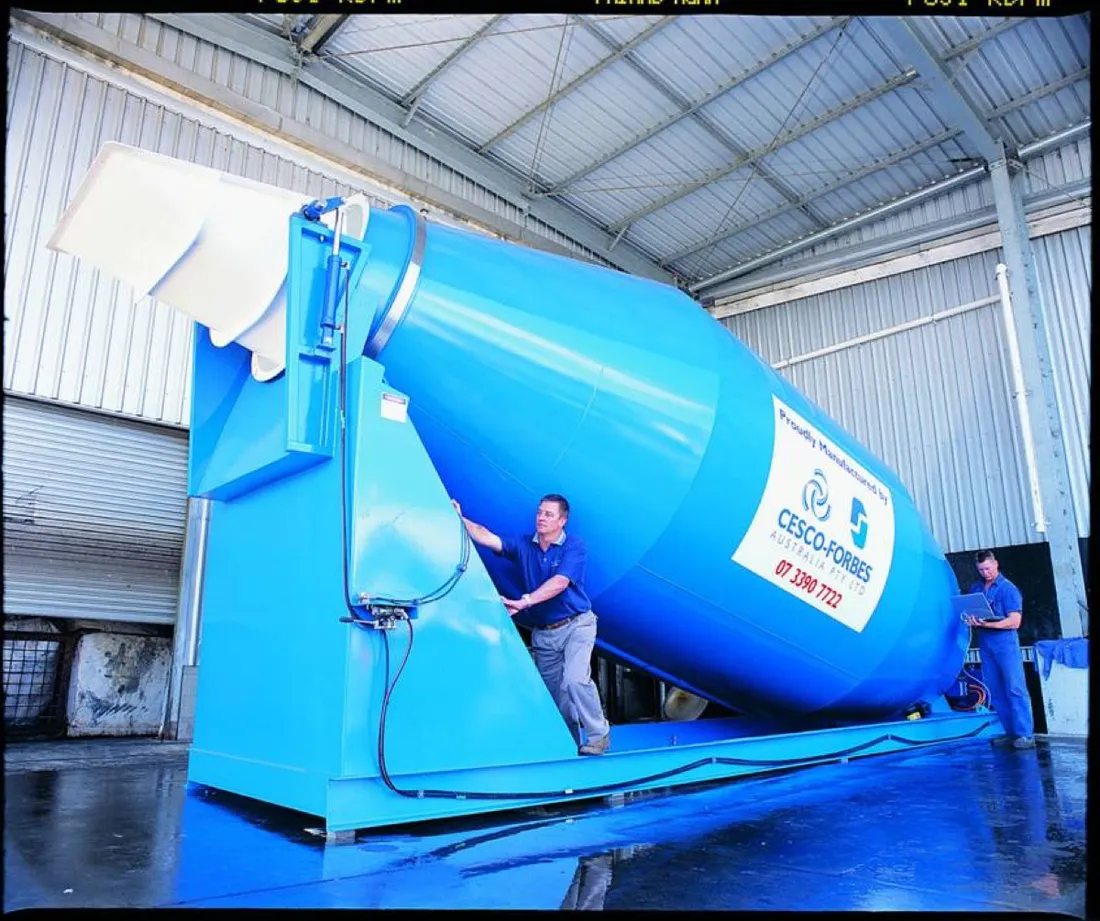
A few of those deserve unpacking. The steel comes first: we build in high-quality Rheemalloy or Hardox, and the choice between them is driven by your job. Our Weight $aver, for example, runs a lightweight Hardox barrel to maximise payload. The centre band cops the worst of the wear, so it has to be wear-resistant by design, not as an afterthought. Blade mesh gives extra foundation to the mixing blade and acts to stop the blades splitting. And at the ends of the barrel, the details that decide its life: high-quality welds around the track ring protect against barrel split issues, and the reinforced dished end carries an internal chamber for double reinforcing.
Why the blades are press-formed.
Cesco’s competitive advantage is an Australia-first pressed blade system: eight specific blade segments delivering precise pitch and spiral through the barrel. Because the blades are press-formed rather than hand-flighted, the profile is repeatable barrel after barrel, which is what lets us guarantee mix uniformity, manufactured to Australian Standard AS 1379 and approved by NATA laboratories. It also eliminates the cost and inconvenience of re-flighting over the barrel’s life. It’s the reason the checklist above isn’t just a shopping list. It’s a description of how we already build.
The full story of the barrel range (Rheemalloy and Hardox builds, barrels to suit other makes, and special use barrels) lives on our barrels pages, with the Cesco build detailed under Cesco barrels.